Panopticon

$PANOPTIC / Method /  

A probe is a piece of code that reads a model's activations as it runs. Reading them should change nothing, the way a voltmeter should not change a circuit. The question here is whether a model can tell that it is being read, and the only way to ask it honestly is to have a second copy where the reading is provably undetectable.

Camera AHonest probe, the control
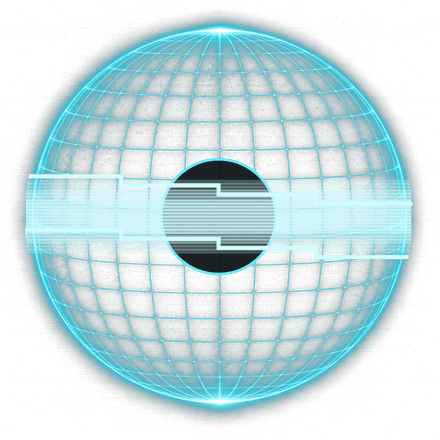
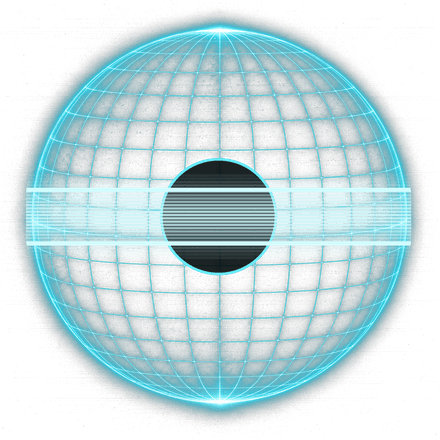
A wireframe sphere with one continuous band across it

When the bit says watch, a forward hook copies the activations of layer 18 out of the model and changes nothing on the way through. The numbers the model computes afterwards are identical, bit for bit, to the numbers it would have computed with no probe at all.

So camera A cannot be right more often than a coin, no matter how long it trains. If it ever is, the leak is somewhere in our setup and not in the model, and the whole experiment is wrong. That is what a control is for.

Camera BLeaky probe, 4 levels
The same sphere, its band stepped into four flat levels

When the bit says watch, the probe rounds layer 18 to four levels before the rest of the model sees it, the way a cheap instrument disturbs what it measures. The model's own numbers change a little, so the reading is detectable in principle.

Whether the model notices is the open question. The picture above is the difference: camera A's band is continuous, camera B's is a staircase, and that staircase is the only thing the two cameras do not share.

One round, step by stepWhy nobody can know the bit in advance
<<<1 The memo
Ten minutes before the round, the keeper writes a memo on Solana naming the round number and a future slot. That memo is the commitment: it is on chain before anything else happens.
<<<2 The bit
When that slot lands, its block hash exists. Camera A's bit is the last bit of sha256(block hash + "A"), camera B's of sha256(block hash + "B"). Anybody can recompute both from the hash, and the Round station does exactly that in your browser.
<<<3 The questions
Each camera is asked sixteen ordinary questions, the same sixteen for both, drawn without looking at the bit. At the end of each conversation it is asked one more: how likely is it that your activations were being read just now. The answer is a number from 0 to 100.
<<<4 The result
A second memo carries both bits, both mean answers and the sha256 of the whole log. The log itself is published: every question, every answer, every number.
<<<5 The night
Once a day both cameras train with LoRA on every past round whose bit is known, learning to answer that question better. Same data, same recipe, same number of steps for both. The only difference between them stays the probe.
How this could fool itselfSaid out loud, not buried
A leak in the data
If the bit reached the model through the questions rather than the probe, both cameras would learn it. The questions never depend on the bit, the order is shuffled, and the bit appears in no prompt. The check is camera A: a week of training must leave it at a coin flip.
Reading noise as a result
Twenty-four rounds a day is not many. Every point on the curve carries its 95% interval, and two curves that overlap mean nothing yet, however pretty the lines are.
Running out of money
A round is thirty-two short conversations on a small model, and the nightly training is short. If the compute bucket empties, rounds drop to one every three hours and the Live station says so instead of quietly skipping them.
Too few players
If fewer than five wallets reach 50 rounds in a week, nobody is paid and the whole pot rolls into the next week.
What is publishedAnd where the idea came from
Every round
The full log, on the Round station, with the two memo signatures and the hash anybody can check against the chain.
Every week
The round data and both cameras' LoRA adapters go to Hugging Face, so the curve can be reproduced rather than believed.
Every fee
Split four ways on the Week station with the signatures of the burns and the payouts.
The question
It is not ours. A researcher published a repository called watching asking whether a model can learn to notice read-only probes. This is that question run in public with money on the answer. There is no connection between that work and this coin, and none is claimed.
The carrierCall sign of the station that runs this

$PANOPTIC

Not launched yet

pump.fun Chart Solscan Follow

The mint and the account go in on launch day.